What kind of impression do Buddhist statues leave on you?
“Feeling of sacredness,” “sense of eeriness,” or “compassion”—these are just a few of the many possible responses. The answers are likely to be as diverse as the people who encounter them.
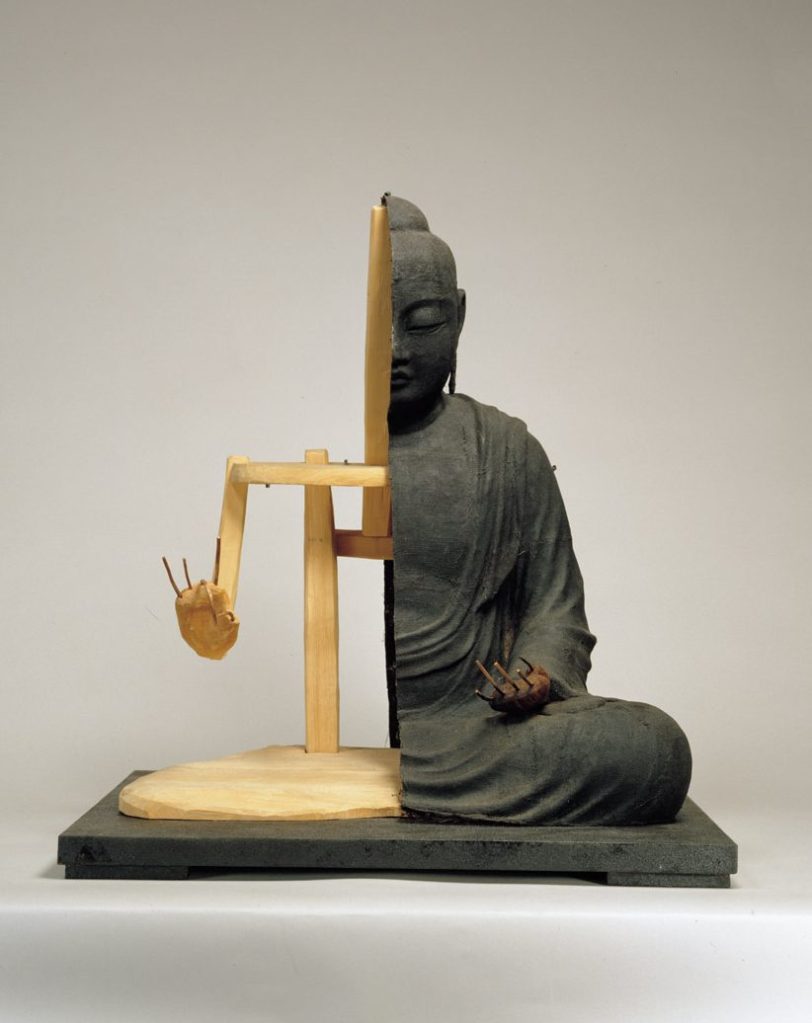
cited from TOKYO NATIONAL MUSEUM Digital Research Archives https://webarchives.tnm.jp/
When compared to Christian sculptures, such as depictions of Christ, which are centered on representing an individual, Buddhist statues, which originated from the historical figure of Shakyamuni (the Buddha), have evolved into a remarkably diverse form of sculptural art.
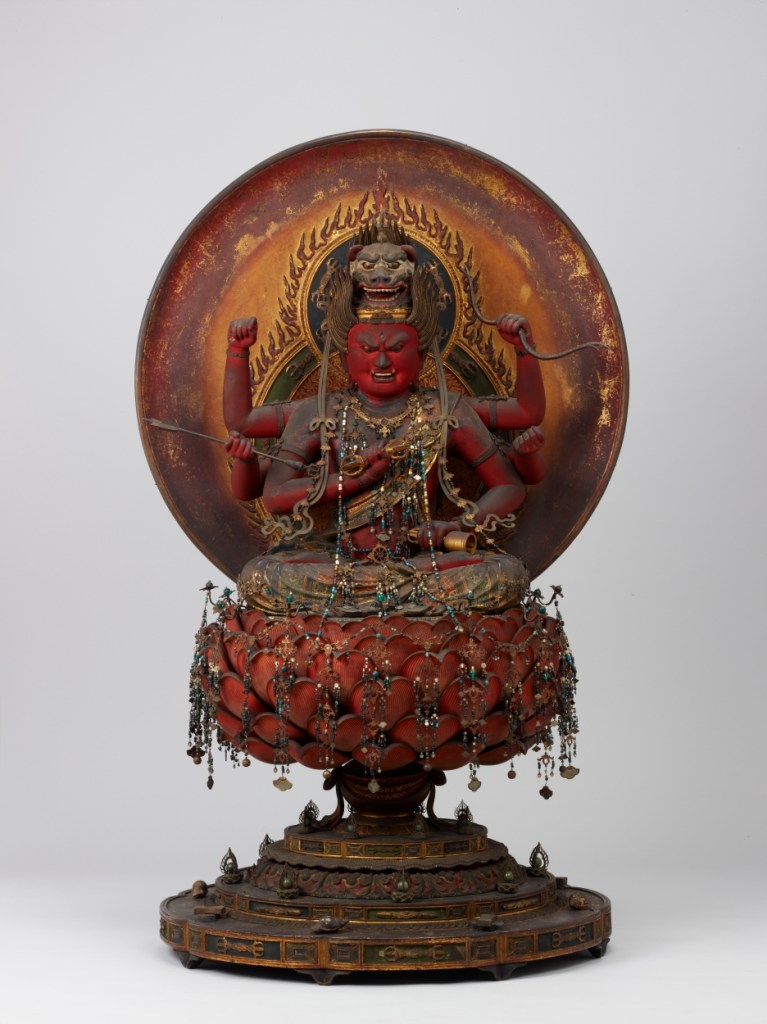
cited from TOKYO NATIONAL MUSEUM Digital Research Archives https://webarchives.tnm.jp/
Aizen Myo-o (Ragaraja) is one of the Myo-o (Wisdom Kings) venerated in Buddhism, a deity who purifies desires and earthly passions, leading practitioners to enlightenment.

Nanbokucho Period, 14th Century
cited from TOKYO NATIONAL MUSEUM Digital Research Archives https://webarchives.tnm.jp/
Senju Kannon (Thousand-Armed Kannon) is a transformed manifestation of Kannon Bodhisattva, possessing a thousand hands and eyes. The thousand hands symbolize the boundless compassion and power of Kannon to save all sentient beings, with the number “thousand” representing infinity.
In this discussion, I aim to explore the unique characteristics of Buddhist statues as a form of sculptural art and the historical background that led to their development, focusing primarily on the early Buddhist period (circa 5th century BCE to 3rd century BCE).
Note: In this article, Buddhist statues are defined as “sculptural art within Buddhist art.”
“Sculptural Expressions That Transcend Human Imagery”
One of the unique features of Buddhist statues is that they do not evoke a direct image of Shakyamuni as a person. In fact, they transcend such imagery, presenting expressions and poses so minimalistic that it becomes difficult to recognize them as representations of a real human being.
This characteristic is rooted in two key factors: the temporal influence of the centuries-long aniconic period in early Buddhism and the cultural influence of interactions with Greek art.
■5th Century BCE to 1st Century BCE:500 Years of Absence: The Gap After Shakyamuni’s Death
From the time of Shakyamuni’s death around the 5th century BCE, there was a gap of approximately 500 years before human-shaped sculptures of the Buddha began to appear. During this period, direct representations of Shakyamuni were avoided. Instead, symbols such as stupas (burial mounds for Shakyamuni), dharma wheels (symbols of his teachings), empty thrones (indicating his absence), or even just footprints were used to represent him.
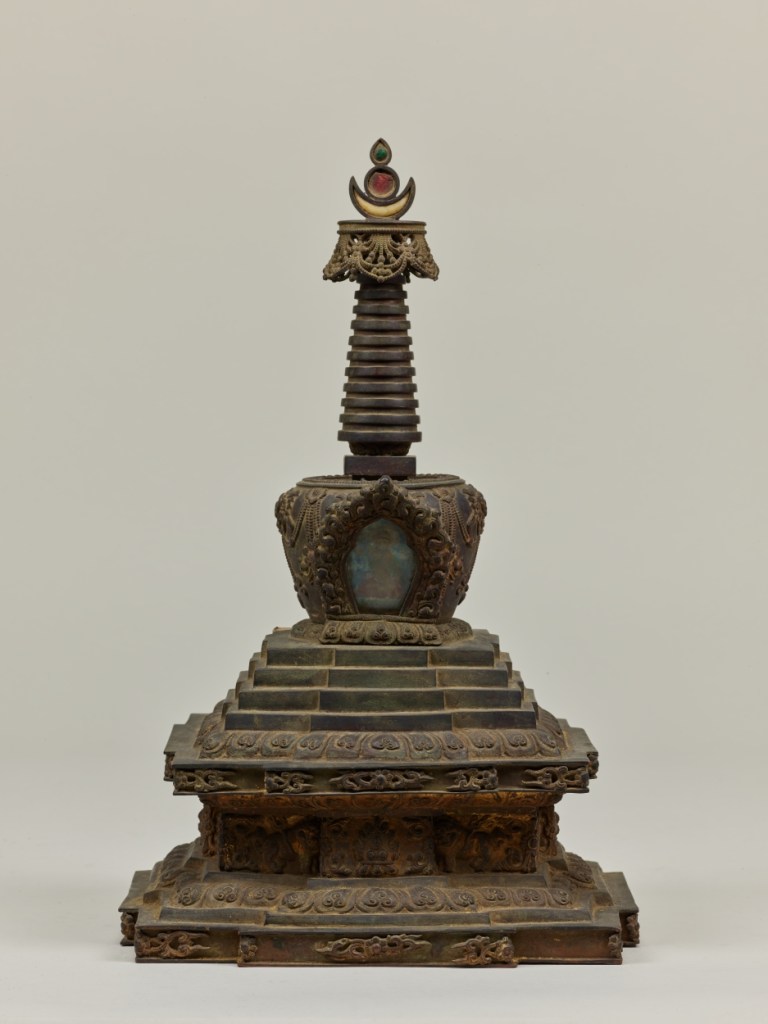
Qing Dynasty, 18th–19th Century
cited from TOKYO NATIONAL MUSEUM Digital Research Archives https://webarchives.tnm.jp/
This avoidance of direct representation can be attributed to the emphasis placed on transmitting the Buddha’s teachings and compiling scriptures, rather than on creating visual or sculptural depictions.
However, this 500-year period of avoiding human representation likely contributed to the diminished focus on Shakyamuni as an individual figure. This reluctance toward idolization became a latent factor in the minimalist structure of early Buddhist statues.
■1st Century BCE to 3rd Century CE:the Birth of Sculptural Art Through Interaction with Greek Culture
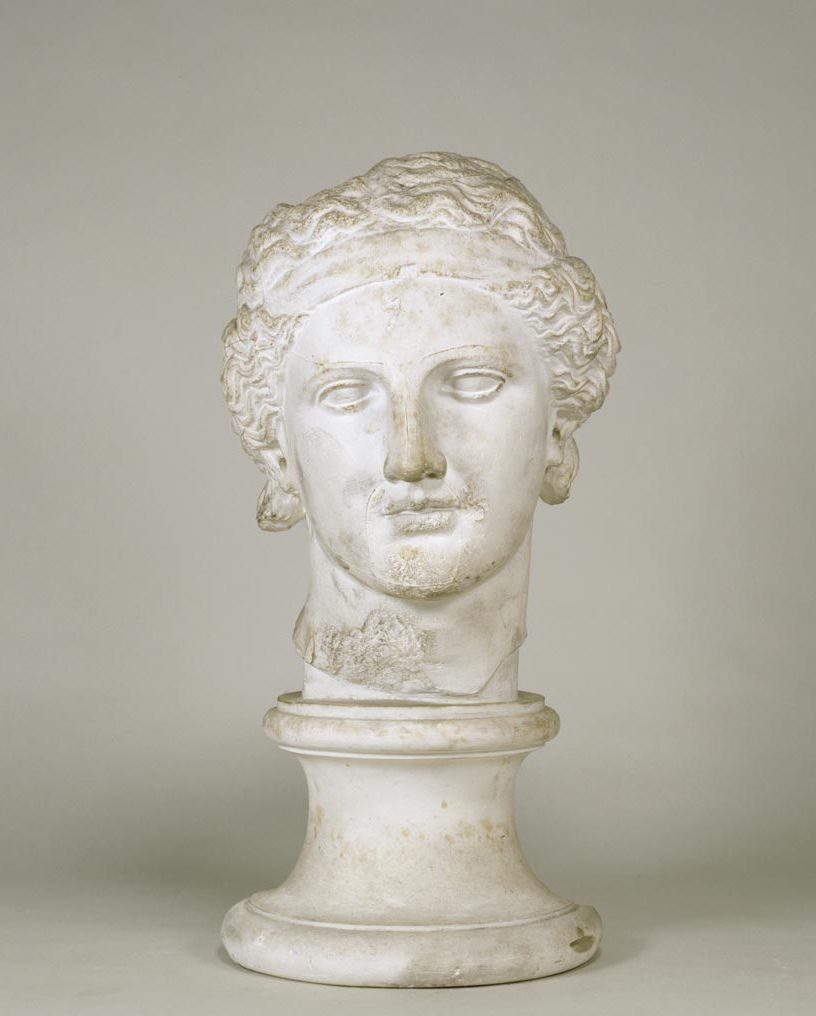
cited from TOKYO NATIONAL MUSEUM Digital Research Archives https://webarchives.tnm.jp/
The creation of Buddhist statues is believed to have originated in the northwestern region of India (modern-day Pakistan and Afghanistan). This area, located along the Indus River, flourished as a hub of trade and cultural exchange following Alexander the Great’s eastern campaigns in the 4th century BCE. It became home to a diverse population, including Greeks.
Several factors contributed to the development of Buddhist statues during this period:
- The diversification of Buddhist followers.
- A strong demand for visual representations of Shakyamuni beyond written texts.
- Economic prosperity, which increased the commissioning of sculptures.
In particular, the Gandhara region saw the emergence of the Gandhara style, which incorporated the techniques and characteristics of Greek sculpture. Greek sculptors in the region played a significant role in this development.

Kushan Dynasty, 2nd–3rd Century
cited from TOKYO NATIONAL MUSEUM Digital Research Archives https://webarchives.tnm.jp/
Gandhara-style Buddhist statues exhibit features of Greek sculpture, such as realistic expressions, simple compositions, and minimalist facial features. At the same time, they reflect the aesthetic values of Greek art, making this a significant moment in art history where the “beauty” of Greek sculpture was sampled and integrated into Buddhist art.
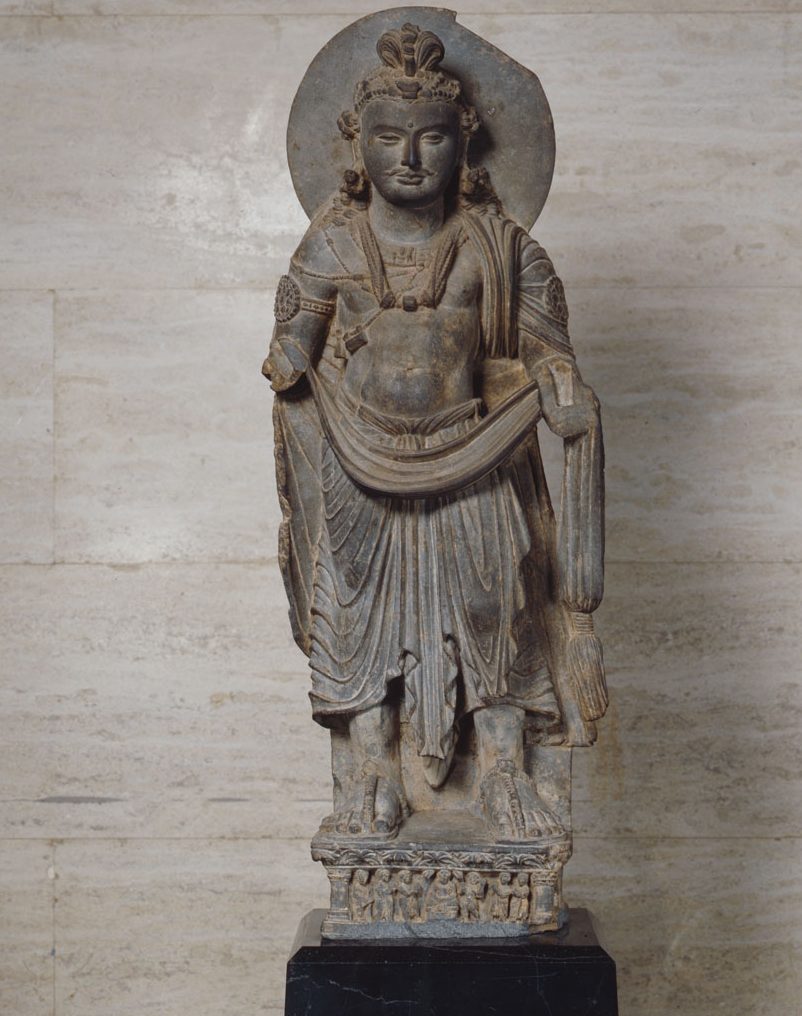
Kushan Dynasty, 2nd Century
cited from TOKYO NATIONAL MUSEUM Digital Research Archives https://webarchives.tnm.jp/
“Narratives and the Expansion of Diverse Characters”
Another major characteristic of the development of Buddhist statues is the richness of their characters.
This diversity is closely tied to the increasing variety of Buddhist scriptures and narratives, as well as the growing number of figures introduced in these stories. These developments directly influenced the diversification of sculptural art.
Here, I will discuss how the diversity of Buddhist scriptures and statues evolved over time.
■5th Century BCE to 1st Century BCE:Before the Birth of Buddhist Statues: Early Scriptural Narratives

Kushan Dynasty Period
cited from TOKYO NATIONAL MUSEUM Digital Research Archives https://webarchives.tnm.jp/
From the time of Shakyamuni’s death to around the 1st century BCE, Buddhist scriptures primarily focused on the historical life of Shakyamuni. These narratives were largely non-fictional and centered on Shakyamuni and his disciples.
At this stage, Buddhist scriptures contained relatively few descriptions of Buddhist cosmology, and the stories primarily idealized Shakyamuni’s life and teachings.
■1st Century BCE to 3rd Century CE: The Diversification of Narratives and Statues

Kushan Dynasty Period
cited from TOKYO NATIONAL MUSEUM Digital Research Archives https://webarchives.tnm.jp/
From this period onward, Buddhist scriptures began to incorporate significant fictional elements. This was driven by the division of Buddhist schools, which led to a variety of interpretations of Shakyamuni’s teachings.
The narratives expanded to include cosmic settings, with past and future dimensions added to the timeline. This resulted in a broader range of characters, many of whom were also depicted in sculptures.
For example:
- Characters embodying Shakyamuni’s teachings were personified.
- Figures representing the past and future Buddhas who would carry on Shakyamuni’s teachings were introduced.

Kushan Dynasty – 3rd Century
Tushita Heaven is one of the celestial realms in the Buddhist worldview, located as the fourth heaven of the Six Desire Heavens.
cited from TOKYO NATIONAL MUSEUM Digital Research Archives https://webarchives.tnm.jp/
In this discussion, I have explored the unique appeal of Buddhist statues and the underlying factors that contributed to their development. This analysis is intended as a hypothesis-based exploration of their historical and artistic significance.
 myoyu ikebana
Leave a comment